
Victory Electric Vehicles IPO Details: Issue Size, Price & Dates
06 January 2026
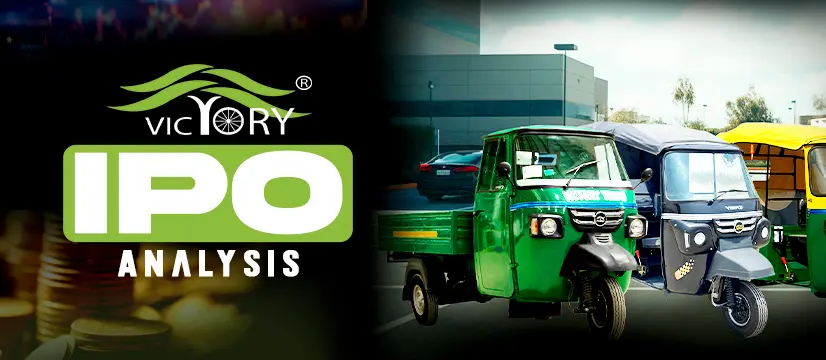
Victory Electric Vehicles International Ltd. is coming with an upcoming IPO of ₹34.56 crore — a profitable EV player on paper, but one where weak cash flows and muted growth temper the excitement.
Let’s explore further:
Before the Deep Dive: What’s Working — and What Isn’t
Now that you’ve seen the snapshot, let’s unpack the full story behind these numbers and understand the business in context.
Indian Electric Vehicle Industry Overview: Growth, Policies and Outlook
India’s EV story is no longer about “potential.” It’s about scale. From a market that was barely a few billion dollars in the early 2020s, the Indian EV industry is now compounding at over 60% annually, making it one of the fastest-growing EV markets globally. Policy has been the real catalyst—FAME-II subsidies, PLI incentives for batteries, lower GST, and aggressive state EV policies have pushed the EV sector up a notch.
The government’s 2030 targets—up to 80% electrification in two- and three-wheelers and 70% in commercial vehicles- aren’t aspirational anymore; they’re shaping capacity decisions today. As adoption accelerates, batteries are emerging as the real bottleneck and value pool, with the Indian EV battery market expected to cross US$27 billion by 2028. The next leg of growth won’t be about who enters the EV space, but who can execute at scale, control costs, and turn policy tailwinds into durable profitability.
Powered by Froala Editor
Stay Connected, Stay Informed –
Don’t miss out on exclusive updates, market trends, and real-time investment opportunities. Be the first to know about the latest unlisted stocks, IPO announcements, and curated Fact Sheets, delivered straight to your WhatsApp.