India's biofuel drive is saving billions but also sparking worries
01 October 2025
India's biofuel drive is saving billions but also sparking worries
48 minutes ago Share Save Abhik Deb BBC News, Delhi Share Save
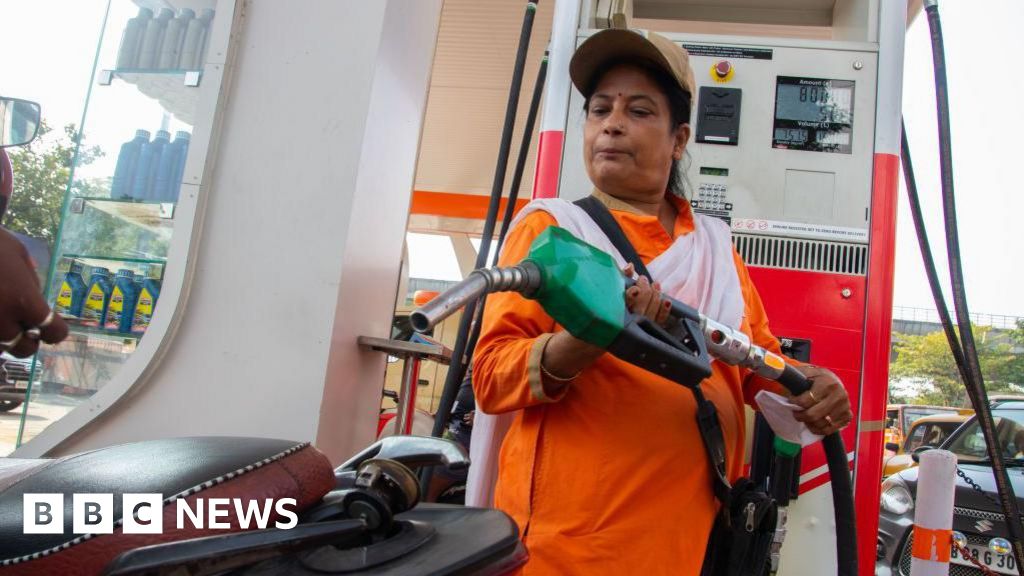
Getty Images Indian government says ethanol blending has cut 69.8 million tonnes of carbon dioxide emissions since 2014
India's drive to blend more biofuels with petrol has helped the country cut millions of tonnes of carbon dioxide emissions and save precious dollar reserves. But it has also sparked worries among vehicle owners and food policy experts about its potential impact on fuel efficiency and food security. Last month, India achieved its objective of blending 20% ethanol with petrol, known as E20, five years ahead of its target. The government views this as a game changer in reducing carbon emissions and trimming oil imports. Since 2014, ethanol blending has helped India cut 69.8 million tonnes of carbon dioxide emissions and saved 1.36 trillion rupees ($1.5 bn; £1.1 bn) in foreign exchange. A study by Delhi-based think tank Council on Energy, Environment and Water (CEEW) shows that carbon dioxide emissions from road transport in India will nearly double by 2050. "The demand for fuel is only going to increase and shifting to ethanol-blended petrol is absolutely necessary to cut down emissions," Sandeep Theng from the Indian Federation of Green Energy, an organisation that promotes green energy, told the BBC. But many vehicles in India are not E20-compliant, making their owners sceptical about the benefits of the policy. Hormazd Sorabjee, editor of Autocar India magazine, said that ethanol has a "lower energy density than petrol and is more corrosive". This results in lower mileage and exposes certain vehicle parts to a greater risk of wear and tear. Mr Sorabjee added that some manufacturers like Honda have been using E20 compliant material since 2009, but many older vehicles on Indian roads are not E20 compatible. While there is no official data on the impact of of E20 fuel on engines, consumers routinely share anecdotes about their vehicle's deteriorating mileage on social media. Many standard insurance policies in India also don't provide cover for damage due to the use of non-compliant fuel, a top executive at online insurance platform Policybazaar, who wanted to stay anonymous, told the BBC. "Consumers need to take add-on policies but even those claims can be denied or downgraded based on fine print of the policy," he added. The federal petroleum ministry has described these concerns as "largely unfounded". In a post on X, the ministry said that engine tuning and E20-compatible materials could minimise the drop in mileage. It also advised replacing certain parts in older vehicles, saying the process was inexpensive and "easily done during regular servicing of the vehicle".
Getty Images Expansion of ethanol use could mean diverting more farm produce into manufacturing fuel
Mr Sorabjee told the BBC that while milage concerns are real, they are a "not always as bad as made out to be". The bigger concern, he said, was the potential damage to vehicle materials due to the corrosive properties of E20. Some vehicle manufacturers are offering ways to mitigate this. Maruti Suzuki, India's biggest four-wheeler maker, is reportedly likely to introduce an E20 material kit that could cost up to 6,000 rupees ($69; £51). The kit will reportedly replace components like fuel lines, seals and gaskets. Bajaj, a leading Indian two-wheeler maker, has advised using a fuel cleaner that could cost around 100 rupees ($1.15; £0.85) for a full tank of petrol. But not all vehicle-owners are convinced. Amit Pandhi, who has owned a Maruti Suzuki car in Delhi since 2017, is unhappy that petrol pumps don't offer the choice to opt for a blend other than E20. "Why should I be forced to buy petrol that offers less mileage and then spend more to make the materials compliant?" he asked. In 2021, a document on India's transition to E20 published by Niti Aayog, a government think tank, had highlighted some of these concerns. It recommended tax benefits for buying E20 compliant vehicles, along with a lower retail price for the fuel. The government has defended its decision to not pass the recommendations, saying that at the time of the report's relase, ethanol was cheaper than petrol. "Over time, procurement price of ethanol has increased and now the weighted average price of ethanol is higher than cost of refined petrol," the petroleum ministry said earlier this month.
Getty Images India is looking to increase ethanol-blending in petrol in the coming years
India's biofuel drive is saving billions but also sparking worries 48 minutes ago Share Save Abhik Deb BBC News, Delhi Share Save Getty Images Indian government says ethanol blending has cut 69.8 million tonnes of carbon dioxide emissions since 2014 India's drive to blend more biofuels with petrol has helped the country cut millions of tonnes of carbon dioxide emissions and save precious dollar reserves. But it has also sparked worries among vehicle owners and food policy experts about its potential impact on fuel efficiency and food security. Last month, India achieved its objective of blending 20% ethanol with petrol, known as E20, five years ahead of its target. The government views this as a game changer in reducing carbon emissions and trimming oil imports. Since 2014, ethanol blending has helped India cut 69.8 million tonnes of carbon dioxide emissions and saved 1.36 trillion rupees ($1.5 bn; £1.1 bn) in foreign exchange. A study by Delhi-based think tank Council on Energy, Environment and Water (CEEW) shows that carbon dioxide emissions from road transport in India will nearly double by 2050. "The demand for fuel is only going to increase and shifting to ethanol-blended petrol is absolutely necessary to cut down emissions," Sandeep Theng from the Indian Federation of Green Energy, an organisation that promotes green energy, told the BBC. But many vehicles in India are not E20-compliant, making their owners sceptical about the benefits of the policy. Hormazd Sorabjee, editor of Autocar India magazine, said that ethanol has a "lower energy density than petrol and is more corrosive". This results in lower mileage and exposes certain vehicle parts to a greater risk of wear and tear. Mr Sorabjee added that some manufacturers like Honda have been using E20 compliant material since 2009, but many older vehicles on Indian roads are not E20 compatible. While there is no official data on the impact of of E20 fuel on engines, consumers routinely share anecdotes about their vehicle's deteriorating mileage on social media. Many standard insurance policies in India also don't provide cover for damage due to the use of non-compliant fuel, a top executive at online insurance platform Policybazaar, who wanted to stay anonymous, told the BBC. "Consumers need to take add-on policies but even those claims can be denied or downgraded based on fine print of the policy," he added. The federal petroleum ministry has described these concerns as "largely unfounded". In a post on X, the ministry said that engine tuning and E20-compatible materials could minimise the drop in mileage. It also advised replacing certain parts in older vehicles, saying the process was inexpensive and "easily done during regular servicing of the vehicle". Getty Images Expansion of ethanol use could mean diverting more farm produce into manufacturing fuel Mr Sorabjee told the BBC that while milage concerns are real, they are a "not always as bad as made out to be". The bigger concern, he said, was the potential damage to vehicle materials due to the corrosive properties of E20. Some vehicle manufacturers are offering ways to mitigate this. Maruti Suzuki, India's biggest four-wheeler maker, is reportedly likely to introduce an E20 material kit that could cost up to 6,000 rupees ($69; £51). The kit will reportedly replace components like fuel lines, seals and gaskets. Bajaj, a leading Indian two-wheeler maker, has advised using a fuel cleaner that could cost around 100 rupees ($1.15; £0.85) for a full tank of petrol. But not all vehicle-owners are convinced. Amit Pandhi, who has owned a Maruti Suzuki car in Delhi since 2017, is unhappy that petrol pumps don't offer the choice to opt for a blend other than E20. "Why should I be forced to buy petrol that offers less mileage and then spend more to make the materials compliant?" he asked. In 2021, a document on India's transition to E20 published by Niti Aayog, a government think tank, had highlighted some of these concerns. It recommended tax benefits for buying E20 compliant vehicles, along with a lower retail price for the fuel. The government has defended its decision to not pass the recommendations, saying that at the time of the report's relase, ethanol was cheaper than petrol. "Over time, procurement price of ethanol has increased and now the weighted average price of ethanol is higher than cost of refined petrol," the petroleum ministry said earlier this month. Getty Images India is looking to increase ethanol-blending in petrol in the coming years
Stay Connected, Stay Informed –
Don’t miss out on exclusive updates, market trends, and real-time investment opportunities. Be the first to know about the latest unlisted stocks, IPO announcements, and curated Fact Sheets, delivered straight to your WhatsApp.